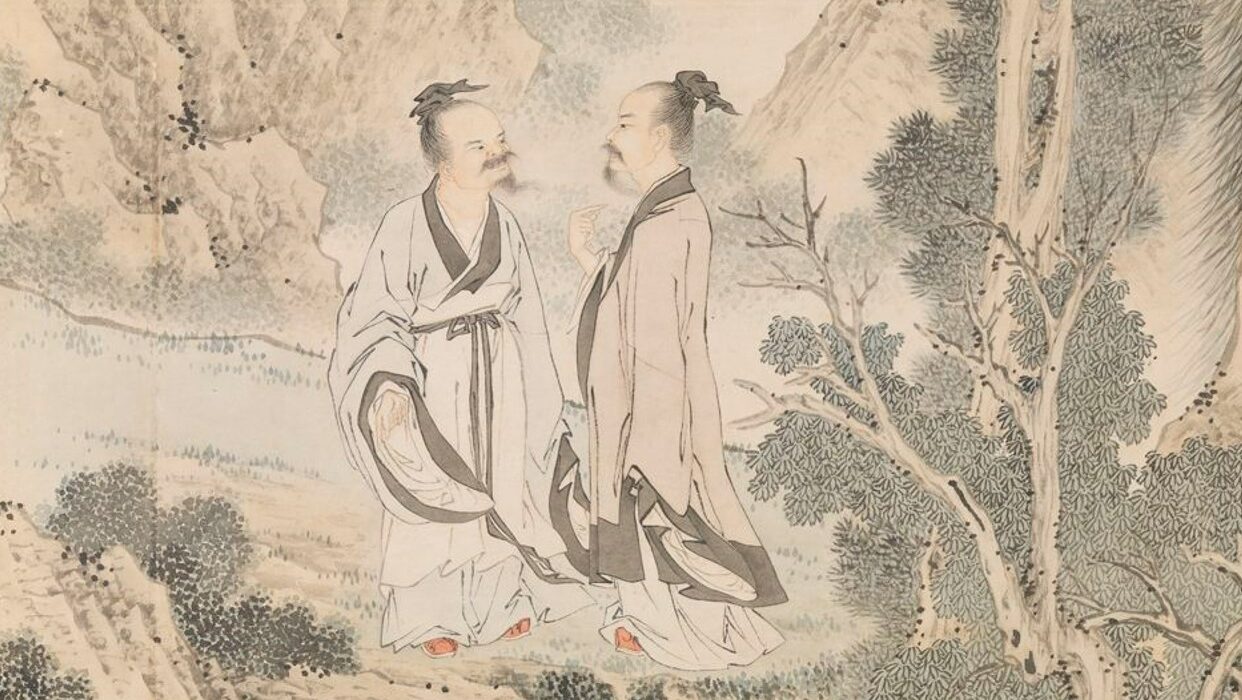
Ma Danyang (马丹阳, 1123–1183), originally named Ma Congyi (马从义), was a prominent Daoist master and acupuncturist of the Jin Dynasty, whose life and work bridged the spiritual and medical traditions of China. Born into a wealthy family in Ninghai (寧海縣), modern-day Muping (牟平縣) in Shandong Province (山東), Ma was raised in the Confucian tradition and excelled in literature, calligraphy, and drama. His early exposure to Daoist thought came when he encountered the reclusive Daoist Li Wumeng (李无梦), who recognized Ma’s spiritual potential and foretold his future as an immortal. This prophecy left a lasting impression on the young Ma, shaping his later pursuit of Daoist cultivation and immortality.
Ma’s transformation from a Confucian scholar to a Daoist practitioner began in earnest when he met Wang Chongyang (王重陽), the founder of the Quanzhen (全真, Complete Reality) Sect. Under Wang’s guidance, Ma and his wife, Sun Bu’er (孙不二), abandoned their worldly lives and devoted themselves to Daoist practice. They traveled extensively, spreading the teachings of Quanzhen and emphasizing renunciation, liberation from desires, and the cultivation of inner purity. Ma’s commitment to these principles was unwavering; he practiced austerities such as enduring extreme heat and cold, begging for alms, and refining his spirit through meditation and internal alchemy (内丹, neidan). His dedication earned him a place among the Seven Pure Ones (七真人, Qi Zhen Ren) of Quanzhen, a group of Wang Chongyang’s most accomplished disciples who became revered as immortals in Daoist tradition.
Ma Danyang’s contributions to Chinese medicine, particularly acupuncture, are among his most enduring legacies. While historical records offer few details about his medical training, his expertise in acupuncture is well-documented. His most famous work, the Poem of Ma Danyang’s Twelve Heavenly Star Points for the Treatment of Miscellaneous Diseases (马丹阳天星十二穴治杂病歌, Ma Danyang Tian Xing Shi Er Xue Zhi Za Bing Ge), outlines a system of twelve essential acupuncture points selected for their broad therapeutic efficacy. These points—ST-36 (Zusanli, 足三里), ST-44 (Neiting, 内庭), LI-11 (Quchi, 曲池), LI-4 (Hegu, 合谷), BL-40 (Weizhong, 委中), BL-57 (Chengshan, 承山), LIV-3 (Taichong, 太冲), BL-60 (Kunlun, 崑崙), GB-30 (Huantiao, 环跳), GB-34 (Yanglingquan, 阳陵泉), HE-5 (Tongli, 通里), and LU-7 (Lieque, 列缺)—were chosen for their ability to treat a wide range of ailments. The poem not only describes the locations of these points but also provides guidance on needling techniques, moxibustion methods, and therapeutic indications. Ma’s approach reflected the Daoist belief in the interconnectedness of body, mind, and spirit, emphasizing the balance of Qi (气) as the foundation of health.
One of Ma’s most famous sayings captures his philosophy: “When a Daoist has a disease, no other people are able to cure it.” This statement underscores his belief in the power of inner cultivation and self-healing, a core tenet of both his spiritual and medical practice. His writings, including The Glorious Light of the Spirits (神光璨, Shen Guan Can) and Collection of Gold and Jade from the Mystical Cavern (洞玄金玉集, Dong Xuan Jin Yu Ji), blend poetic expression with practical guidance on Daoist alchemy and medical theory. These works, preserved in the Daoist Canon, continue to inspire practitioners of Chinese medicine and Daoist cultivation.
Ma Danyang’s later years were spent in retreat at You Xian Gong (游仙宫) in Laiyang (莱阳), where he focused on teaching and writing. According to the Annals of Laiyang (莱阳县志), he is said to have “featherized” (成仙, became an immortal) in 1183, leaving behind a legacy that transcended his physical existence. Posthumously, he was honored with the title Dan Yang Bao Yi Wu Wei Zhen Ren (丹阳抱一无为真人, “Dan Yang the Pure One who holds the One and practices Not Doing”) by Kublai Khan, reflecting his status as a saint in Daoist tradition. His influence extended beyond his lifetime, as his teachings and acupuncture methods were preserved and expanded upon in later texts, such as Yang Jizhou’s Great Compendium of Acupuncture and Moxibustion (针灸大成, Zhen Jiu Da Cheng), which includes Ma’s poem as a foundational reference.
Ma Danyang’s life exemplifies the integration of Daoist spirituality and Chinese medicine. His emphasis on internal alchemy, ethical living, and the cultivation of Qi provided a holistic framework for health and spiritual attainment. As a master of both the esoteric and the practical, Ma’s legacy endures in the continued practice of his acupuncture methods and the enduring appeal of his teachings on harmony, balance, and the pursuit of immortality. His story reminds us that true healing, whether of the body or the spirit, requires dedication, wisdom, and a deep connection to the natural world.